
Home Blog

How to Top Up PUBG Mobile UC in 2026: A Step-by-Step Guide

0

Want to know how to top up PUBG Mobile UC quickly, safely, and at the best possible price? You’re in the right place. UC (Unknown Cash) is what stands between you and the Royale Pass, that limited-edition outfit, or the crate you’ve been eyeing all season, and in 2026, there are more ways than ever to buy it. This step-by-step guide covers every method, with a special focus on what works best for players in Nigeria and across Africa.

Quick answer: You can top up PUBG Mobile UC in two ways: directly through the in-game store (using Google Play or the App Store) or through a third-party PUBG UC shop, where you enter only your Player ID and often pay a lower effective price with local payment options. For most Nigerian players, a trusted third-party store offers better value and more flexible payment methods than in-game billing.

What Is PUBG UC and Why Do You Need It?

UC (Unknown Cash) is the premium in-game currency for PUBG Mobile. Unlike the free BP (Battle Points) you earn by playing matches, PUBG UC has to be purchased, and it unlocks the content that actually turns heads on the battlefield. With UC, you can buy:

  • The Royale Pass and Royale Pass tiers each new season
  • Character outfits, gun skins, and weapon finishes
  • Crates and lucky draws for rare cosmetic items
  • Emotes, parachute skins, and vehicle skins
  • Upgrades to signature items like the Groza and M416 skins

In short, if you want to stand out or keep up with the meta cosmetics, UC is essential. The question is not whether to top up your PUBG Mobile UC, but how to do it in the smartest, most cost-effective way.

PUBG UC Packages and Prices at a Glance

UC is sold in fixed tiers, and larger bundles include bonus UC that lowers your effective cost per unit. The exact naira price shifts with the exchange rate and any promotions running, so always check the current rate before you buy — but the tier structure below stays consistent:

UC PackageBonus UCTotal UCBest for
60 UC60Small single-item purchases
300 UC+25325Entry-level Royale Pass top-up
600 UC+60660Elite Royale Pass
1,500 UC+3001,800Elite Pass Plus + extras
3,000 UC+8503,850Crates and lucky draws
6,000 UC+2,1008,100Serious cosmetic collecting
16,200 UC (approx.)VariesVariesBest value per UC on big spends

Bonus amounts and top tiers can vary slightly by region and by seasonal promotion. The bigger the bundle, the more bonus UC you get — so the effective price per UC drops as you go up the tiers.

The Two Main Ways to Top Up PUBG UC

There are two reliable routes to getting UC into your account in 2026: buying directly through the in-game store, or using a dedicated third-party top-up shop. Both are legitimate. The difference usually comes down to price, payment convenience, and how much value you get for your naira.

Method 1: How to Top Up PUBG UC Directly In-Game

This is the official route built into PUBG Mobile itself.

  1. Open PUBG Mobile and log in to your account.
  2. Tap the UC icon (usually at the top-right of the lobby screen) or head to the in-game shop.
  3. Select a UC package from the tiers shown in the table above.
  4. Choose your payment method. Depending on your device, you’ll pay through Google Play (Android) or the App Store (iOS).
  5. Confirm the purchase. The UC is credited to your account almost instantly.

The upside here is simplicity and security — you’re paying the platform directly. The downside for Nigerian players is that Google Play and App Store billing often depends on a card set up for international payments, and the prices are pegged to foreign currency, which can sting when the exchange rate moves against the Naira. You also rarely get discounts through this route.

Method 2: How to Top Up PUBG UC Through a Third-Party Shop

This is where many value-conscious players in Nigeria head, because a good third-party store often offers the same UC at a lower effective price, with local payment options that don’t require an international card.

A dedicated PUBG UC shop lets you buy UC by simply entering your PUBG Player ID — no need to log in with your password, which keeps your account credentials safe. The UC is then delivered directly to your account. Here’s how the process typically works:

  1. Head to the top-up page and select PUBG Mobile.
  2. Enter your PUBG Player ID. You can find this on your profile in-game; it’s the numeric ID displayed under your character name.
  3. Choose your UC package. Packages usually mirror the in-game tiers, and you’ll see the price clearly before you commit.
  4. Select your payment method. This is a big advantage for African players—platforms like this often support a wide range of options beyond international cards.
  5. Complete payment and confirm. UC is credited to the account tied to the Player ID you entered, usually within minutes.

Because you skip the app-store markup, third-party stores can be a genuinely economical way to fund a new season of play.

Best Payment Methods to Top Up PUBG UC in Nigeria

One of the most common frustrations for gamers in Nigeria is hitting a payment wall. Here’s what to look out for in 2026:

  • Local debit cards (Verve, Naira Mastercard/Visa): Increasingly accepted on third-party platforms, though some in-game routes still require a dollar card.
  • Bank transfers and online banking: A popular workaround that avoids card limits entirely.
  • Mobile money and wallet options: Growing in availability and handy for smaller top-ups.
  • Virtual dollar cards: These bridge the gap when a platform only accepts international cards.

Before choosing where to top up, always confirm which payment methods a store supports so you’re not left stranded at checkout.

How to Find Your PUBG Player ID

Since third-party top-ups need your Player ID rather than your login, it’s worth knowing exactly where to find it:

  1. Open PUBG Mobile and tap your profile picture in the top-left of the lobby.
  2. Your numeric Player ID appears directly beneath your in-game name.
  3. Copy it carefully — a single wrong digit sends the UC to the wrong account.

<!– IMAGE 2 — alt: “Where to find your PUBG Mobile Player ID for a UC top-up” –>

Double-checking this number is the single most important step in any third-party top-up.

How to Get Cheap PUBG UC: Tips for the Best Value

  • Buy before a new season drops. Topping up your UC ahead of a Royale Pass launch means you’re ready the moment the new pass goes live, instead of scrambling mid-queue.
  • Compare the effective naira price. Look past the sticker figure and work out what you’re actually paying per UC, factoring in any bonus UC in a package (see the table above).
  • Watch for seasonal promotions. Many stores run discounts around major game updates and holidays.
  • Bookmark a store you trust. Once you’ve found a reliable PUBG UC shop with payment methods that suit you, sticking with it saves time on every future top-up.
  • Only ever share your Player ID, never your password. No legitimate top-up service needs your account login.

Frequently Asked Questions about PUBG UC Top Up

Is it safe to buy PUBG UC from a third-party store?

Reputable platforms deliver UC using only your Player ID, so you never hand over your account credentials. As with any online purchase, stick to established stores with clear pricing, secure checkout, and verifiable reviews.

How long does PUBG UC delivery take?

Through the in-game store, it’s near-instant. On a trusted third-party PUBG UC shop, delivery is usually completed within a few minutes of payment.

Why is third-party PUBG UC sometimes cheaper?

Third-party stores don’t carry the same app-store commission built into in-game pricing, which can translate into a lower effective cost, especially valuable when the naira-to-dollar rate is volatile.

Do I need to log out or share my password to top up UC?

No. You only need your numeric Player ID. If a service asks for your password, treat that as a red flag.

Can I top up PUBG UC for a friend?

Yes, since top-ups use the Player ID, you can gift UC by entering your friend’s ID instead of your own.

Conclusion

Knowing how to top up PUBG Mobile UC in 2026 comes down to choosing the route that offers the best mix of price, convenience, and payment flexibility. The in-game store is the most straightforward option, but for players in Nigeria and across Africa, a third-party shop often unlocks better value and far more payment choices.

Whichever method you choose, remember the golden rule: protect your account by sharing only your Player ID, confirm your payment options ahead of time, and top up before the next season so you’re never caught without UC when it matters most.

Cloudflare Launches Cloudflare OS, an Open-Source AI Workspace for Enterprise Teams

0
Cloudflare OS: Open-source AI workspace for teams

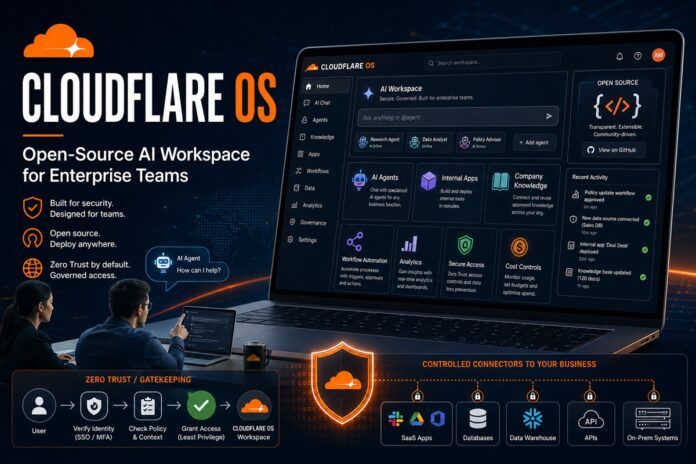
Cloudflare has launched Cloudflare OS, an open-source artificial intelligence workspace designed to help employees use AI agents, automate repetitive tasks, access authorized company data, and build internal applications from a web browser.

Unlike general-purpose AI assistants that know little about an organization’s internal processes, Cloudflare OS is designed around the terminology, systems, policies and working methods of the company deploying it. The platform allows organizations to provide employees with AI tools that understand company context while maintaining centralized security, governance and cost controls.

Cloudflare OS is available immediately as open-source software that organizations can deploy inside their own Cloudflare accounts. The company is also developing a fully managed version that will be accessible through the Cloudflare dashboard.

An AI Workspace Built Around Company Knowledge

Most workplace AI tools begin each conversation without understanding the organization using them. Employees may have to repeatedly explain internal terminology, procedures, approval requirements, and business context before the AI can complete a useful task.

Cloudflare OS takes a different approach. Companies can create a shared library of organisational context and reusable skills that agents can reference when performing work.

This could include instructions for preparing a sales report, reviewing a contract, responding to a customer issue, analysing operational data or following an internal approval process. Once a team documents the preferred method for completing a task, other employees can reuse that knowledge instead of creating new prompts and processes from scratch.

The platform begins with a browser-based conversation similar to other AI assistants. However, each workspace can include persistent files, connected resources, company-approved instructions and an isolated runtime in which agents can write and execute code.

Employees do not need to be developers or use a command-line interface to access the platform. They can ask an agent to conduct research, prepare documents, analyse live company data, build presentations or automate multi-step workflows from their browsers.

Developed Initially for Cloudflare Employees

Cloudflare OS was originally created as an internal platform for Cloudflare’s workforce.

“Cloudflare OS is how we run Cloudflare. For AI to truly transform an enterprise, it can’t live in a silo or behind a developer bottleneck. Every employee needs the ability to build, iterate, and automate safely,”

said Matthew Prince, co-founder and CEO of Cloudflare.

“We built this because nothing else did what we needed. Now any company can start from where it took us years to get.”

The company says it gave every employee access to the first version in May 2026. Thousands of employees across engineering and non-technical departments now use the system to create documents and presentations, automate repeatable tasks, research topics and build small applications for their daily work.

Cloudflare rebuilt the platform after identifying limitations in its first internal version. Early workspaces were primarily private, applications were mostly static and some predictable jobs continued to consume unnecessary AI tokens because users had to rerun agent instructions.

Collaboration also introduced a more serious challenge: controlling which information an agent had accessed and preventing that information from being exposed when an employee shared a workspace, application or AI-generated output.

The redesigned Cloudflare OS therefore combines an employee-facing agent workspace, an application-building platform and a new security framework for governing access to internal systems.

Employees Can Turn AI Outputs into Applications

Cloudflare OS is not limited to generating text or answering questions. Employees can turn conversations and outputs into working internal applications.

An employee could, for example, ask the workspace to create a dashboard that tracks project issues, an application for reviewing customer requests or a tool that visualises information from an approved company database.

Each application can include a browser interface, server-side code, an API and its own persistent database. Applications are private by default but can be shared with colleagues in a similar way to sharing a document.

Employees can share either the working application or a blueprint that allows another user to create an independent copy. A copied application receives its own data and connected resources rather than inheriting the original creator’s credentials, conversation history or stored information.

Because the applications remain editable, colleagues can ask AI agents to modify them without submitting a traditional software-development request. Cloudflare believes this model could allow employees to create smaller, highly specialized workplace tools without depending entirely on central engineering teams.

Support for Agents and Deterministic Workflows

Cloudflare OS can also convert recurring tasks into automated workflows.

Not every job requires an AI model to make every decision. Some business processes consist mainly of predictable steps, with AI needed only for specific activities that require interpretation or judgment.

The platform can combine conventional code for predictable actions with AI models for the parts that benefit from generative intelligence. Workflows can run manually, according to a schedule or when an event occurs in a connected business system.

This approach could help organisations reduce model usage and improve reliability by avoiding unnecessary AI inference for tasks that ordinary software can complete more efficiently.

Cloudflare OS also supports existing Model Context Protocol (MCP) servers via Cloudflare’s MCP Server Portals, allowing companies to connect approved tools and services already exposed via MCP.

Zero Trust Security and Gatekeepers

Security and governance are central to Cloudflare OS.

Access to the workspace is controlled through Cloudflare Access. Once inside the platform, every new agent and application begins without permission to access company resources.

Agents can request access to a specific resource, but the organisation determines whether that request should be approved. Credentials remain isolated from the agent and from any code the agent generates.

Cloudflare OS also limits network access. Server-side code runs in an isolated Cloudflare Worker without unrestricted outbound Internet connectivity, while browser-based code runs inside a sandbox. Connections to external services must be provided through explicitly approved capabilities.

A major part of this security system is a component Cloudflare calls a Gatekeeper.

Gatekeepers sit between Cloudflare OS and external services such as code repositories, databases or business applications. Instead of giving an agent broad access to an entire service, an administrator can restrict it to particular resources and actions.

For example, an agent could receive permission to read issues from one GitHub repository without being allowed to view the source code. A Gatekeeper could also hide sensitive fields, impose rate limits or require human approval before an action such as merging a pull request is completed.

Gatekeepers handle credentials, enforce access policies, record the resources an agent reads and mediate actions that could affect external systems.

Access Policies Follow the Data

Cloudflare OS also attempts to solve a difficult enterprise AI problem: controlling what happens after an agent has accessed sensitive information.

Restricting the first request is not always enough. An authorised employee might ask an agent to read a confidential database and produce a dashboard. Sharing that dashboard could unintentionally expose the underlying information to colleagues who were not authorised to access the original database.

To address this risk, Cloudflare OS keeps a record of the resources an agent has observed. That record remains attached to the workspace and its outputs.

When another person attempts to access the workspace, application or generated content, Gatekeepers can check whether the person also has permission to view the underlying resources. Information previously accessed by an agent can also affect whether the agent is permitted to send data externally, invite collaborators or transfer work to another agent.

Companies Can Choose Their AI Models

Cloudflare OS does not require organisations to use a single AI model provider.

Every model request passes through Cloudflare AI Gateway, giving administrators a central location for deciding which models employees and applications can use.

Companies could reserve more capable and expensive models for complex work while routing routine tasks to smaller, cheaper alternatives. This may help reduce the cost of deploying AI across a large workforce.

Administrators can attribute AI spending to individual employees, teams, applications, or workspaces. They can also establish budgets, impose rate limits, and determine what should happen when a spending threshold is reached.

You may also be interested in Cloudflare Wallets.

Open-Source Deployment and Implementation Partners

Cloudflare has released both the core Cloudflare OS repository and an example deployment based on its internal implementation.

Organisations can install the platform in their Cloudflare accounts and configure it with their own Cloudflare Access policies, AI Gateway settings, interfaces, data and integrations. Because the software is open source, companies retain greater control over the applications, skills and connections they build rather than tying them entirely to a closed workplace AI vendor.

Cloudflare is also working with implementation partners, including Presidio and Happy Cog, to help enterprises customise the platform. Partners can assist with connecting internal systems, creating organisation-specific interfaces, documenting shared skills and configuring security, compliance and cost controls.

Availability and Future Plans

Cloudflare OS is currently available through Cloudflare’s open-source GitHub repository. Organisations can explore the code, test a demonstration or deploy the starter version into their own Cloudflare accounts.

A managed Cloudflare OS product is expected to arrive through the Cloudflare dashboard. Cloudflare is also working on container support for development workflows and plans to bring Cloudflare OS workspaces into Slack and other workplace chat platforms.

The launch places Cloudflare more directly in the growing enterprise AI workspace market. However, rather than competing only as another workplace chatbot, the company is positioning Cloudflare OS as infrastructure through which organisations can give employees AI agents, application-building capabilities and governed access to internal systems.

Its open-source model, support for multiple AI providers, and emphasis on Zero Trust controls could make it particularly attractive to companies concerned about vendor lock-in, uncontrolled AI spending, and employees exposing sensitive business information through unapproved AI tools.

Read Cloudflare’s full announcement in this blog post.

Also see Why Cloudflare Is Betting on AI Agent Payments Now, And What It Means for the Bot-Driven Web.

Cloudflare Wallets Launches: A Programmable Payment System for AI Agents

0
Cloudflare Wallets: AI payment system with virtual wallets

Cloudflare has launched Cloudflare Wallets, a programmable payment and identity system built specifically for AI agents on what the company calls the “agentic Internet.” Announced on August 4, 2026, the product lets AI agents pay for APIs and content on their own, within spending limits that humans set and control.

Right now, you can claim a Cloudflare Wallet handle for your account. The handle gives you a unique username for connecting with merchants. The ability to actually set up a wallet and pay for APIs and content is coming soon.

Here’s what launched, how it works, and why it matters for the future of agentic commerce.

What Are Cloudflare Wallets?

Cloudflare Wallets is a system that gives AI agents two things they have never reliably had: a native way to pay for services, and a stable identity on the web.

Today, when an AI agent tries to use a new API, it usually hits a wall. It has to navigate a login page designed for humans, ask a person to add a payment method, generate an API key, and then work out how to call the service. Agents frequently give up and hand the whole job back to a human, which slows down the growth of agentic commerce and makes it hard for agents to compare many services.

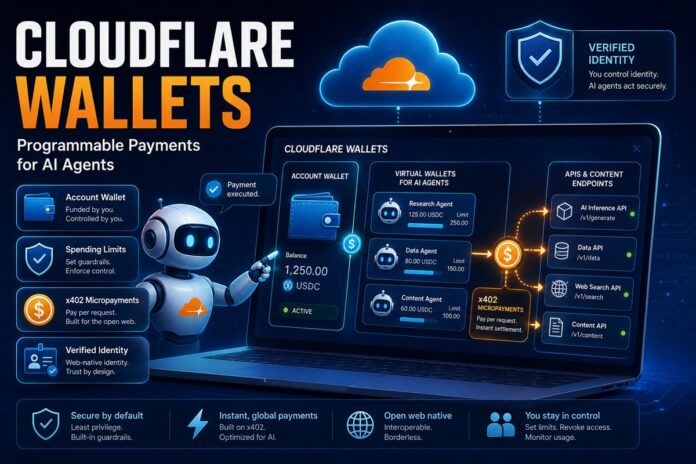
Cloudflare Wallets is designed to remove that friction. With a wallet, an agent can store stablecoins, purchase services, and receive funds across the web without a human stepping in for every transaction.

How Cloudflare Wallets Work: Account Wallets vs Virtual Wallets

There are two types of Cloudflare Wallets, and the split between them is the core of how the system stays safe.

Account Wallets are built for humans who own and use Cloudflare accounts. As the account owner, you can add funds, delegate spending to agents, and remove funds whenever you need to.

Virtual Wallets are built for agents and run on API keys. An agent spends from its Virtual Wallet according to the permissions it has been given, and its maximum spend is capped by a limit the Account Wallet owner sets.

This lets an agent act on your behalf without asking for approval on every purchase, while making it impossible for the agent to overspend your account.

You can define guardrails for each Virtual Wallet, including an allowance, an allow list of approved merchants, and a maximum transaction size. Those guardrails are what let you turn an agent loose to explore dozens or hundreds of APIs without worrying about a runaway bill.

The x402 Protocol Behind the Payments

Cloudflare Wallets is built on the x402 protocol, an open standard that attaches payments directly to HTTP requests. This is what makes agent micropayments possible: an agent can pay a few cents to try an API without creating an account first.

The wallets connect to Cloudflare’s Monetization Gateway, announced earlier in the same month, which lets Cloudflare customers get paid for their websites, APIs, and content.

Monetization Gateway is the “sell” side; Wallets is the “buy” side. Together, they form a two-sided, machine-native marketplace where agents pay for anything from AI inference to data to content using stablecoin micropayments.

If you want to pay or get paid through Monetization Gateway or other x402-compatible endpoints, you’ll need a wallet.

Safe Spending: Why Limits Give Agents More Freedom

Cloudflare frames spending caps as freedom rather than restriction, and the logic is worth understanding.

If an agent is responsible for $10, you can worry far less about its spending than if it controls $1,000. And because trying an API through x402 can cost just a few cents, $10 is more than enough for an agent to test and compare many options. The tight limit is exactly what makes it safe to let the agent explore on its own.

The controls scale to teams, too. Want to give every employee a $100-per-week budget for AI inference? You can fund an Account Wallet and create a Virtual Wallet for each employee with that rule built in. If someone hits their limit, they can request a manual override from a human authorized to change the Account Wallet.

The system is designed so you don’t have to monitor spending every day. If something unusual happens, such as unexpectedly fast spending, a human can review it and decide whether to raise the limit, approve a one-time top-up, or let the caps do their job.

Giving AI Agents a Verifiable Identity

Payments are only half of what Cloudflare is building. The other half is identity.

Right now, when an agent arrives at your website, you usually know very little about it, even though it is acting for a real person or organization. That breaks a lot of traditional web business models. It’s easy to offer a free trial or sign-up credit to a human, but hard to offer the same to an anonymous agent, especially when one person can spin up dozens of agents.

Cloudflare solves this by linking wallets to a Cloudflare account through cloudflare.pay. Agents can optionally identify themselves as a delegate of an account. A research agent might live at an address like research.example.cloudflare.pay, letting merchants see that it belongs to a specific organization. Declaring identity is completely optional, and it’s up to each business to decide whether it wants to prioritize dealing with known agents.

Cloudflare compares the approach to how the web treats VPNs: an unidentified user isn’t automatically untrustworthy, but they may need to prove themselves more. The identity layer builds on existing Cloudflare tools like Web Bot Auth, Turnstile, and Bot Management, turning a hard-to-read cryptographic key pair into a human-readable name, much like DNS maps domain names to IP addresses.

Why Cloudflare Wallets Matter

Cloudflare notes that a majority of web traffic is now driven by bots, which is the backdrop for this entire launch. The company is assembling the building blocks for agentic commerce to work end to end: Monetization Gateway so sellers can get paid without traditional payment infrastructure, Wallets so buyers can pay headlessly through agents, and identity so merchants can know who they’re dealing with.

For developers, startups, and businesses experimenting with AI agents, this points toward a near future where agents can independently discover, pay for, and use online services, all within limits their owners define. For anyone building or monetizing APIs and content, it’s an early signal of how machine-to-machine commerce may actually get paid for.

Frequently Asked Questions about Cloudflare Wallets

What is Cloudflare Wallets? Cloudflare Wallets is a programmable payment and identity system for AI agents. It lets agents store stablecoins, pay for APIs and content, and receive funds, all within spending guardrails set by a human account owner.

When did Cloudflare Wallets launch? Cloudflare announced Wallets on August 4, 2026. You can claim a wallet handle at cloudflare.pay right away, while the ability to set up wallets and pay for services is coming soon.

What is the difference between an Account Wallet and a Virtual Wallet? Account Wallets are for humans who own Cloudflare accounts and can add or remove funds and delegate spending. Virtual Wallets are for agents, run on API keys, and can only spend up to a limit set by the Account Wallet owner.

What is the x402 protocol? x402 is an open protocol that attaches payments to HTTP requests, enabling micropayments. It lets an AI agent pay small amounts, often just cents, to use an API without first creating an account.

Do I need a Cloudflare Wallet to use Monetization Gateway? Yes. To pay or get paid through Cloudflare’s Monetization Gateway or other x402-compatible endpoints, you’ll need a wallet.

How do spending limits make using agents safe? Account Wallet owners set guardrails on each Virtual Wallet, including an allowance, an allow list of approved merchants, and a maximum transaction size. These caps let agents explore and test many services autonomously while preventing overspending.

How to Apply for the FG C.L.I.C.K.D. Scheme: Step-by-Step Guide to Getting a Laptop or Smartphone on Credit

0
How to Apply for the FG C.L.I.C.K.D. Scheme

The Federal Government has opened applications for a scheme that lets Nigerians take home a laptop, smartphone or tablet now and pay for it in installments. It is called C.L.I.C.K.D., short for Credit for Laptops, Internet, Connectivity and Knowledge Digital Devices, and the application portal is already live.

If you have ever abandoned a remote job application, a data analytics course or a freelance gig because you could not raise a few hundred thousand naira for a laptop upfront, this is the programme aimed squarely at you.

This guide walks you through exactly how to apply, who qualifies at this stage, what information the form asks for, and, just as importantly, the loan terms that CREDICORP has not yet made public.

Quick facts about C.L.I.C.K.D.

DetailInformation
Full nameCredit for Laptops, Internet, Connectivity and Knowledge Digital Devices
Implementing agencyNigerian Consumer Credit Corporation (CREDICORP)
Supervising ministryFederal Ministry of Communications, Innovation and Digital Economy
Launch dateTuesday, 21 July 2026, Abuja
Launch partner3 Million Technical Talent (3MTT) Programme
Current pilot size1,000 locally assembled laptops
Application portalcredicorp.ng/clickd
Application feeNone
Interest rate / repayment termsNot yet announced

What Is the C.L.I.C.K.D. Scheme?

C.L.I.C.K.D. is CREDICORP’s flagship device financing initiative. Rather than handing out free gadgets, it extends structured consumer credit so that working Nigerians can buy productivity devices and spread the cost over time.

The FG programme was unveiled at the Afreximbank African Trade Centre in Abuja on 21 July 2026, in partnership with the Federal Ministry of Communications, Innovation and Digital Economy. The Minister, Dr Bosun Tijani, chaired the launch as Chief Launcher, while CREDICORP’s Managing Director and CEO, Engr. Uzoma Nwagba, presented the scheme’s design and first-phase targets.

Nwagba framed the initiative as one that “transforms digital devices from a barrier into an opportunity”, noting that embedding credit inside a national talent pipeline like 3MTT gives qualifying Nigerians a responsible route to the tools they need to learn and earn.

Tijani, for his part, tied it to the broader industrial agenda, arguing that Nigeria’s digital economy thrives only when citizens have both the skills and the tools to succeed with locally assembled devices, thereby strengthening domestic manufacturing.

The devices covered by the programme include:

  • Laptops
  • Smartphones
  • Tablets
  • Connectivity devices (routers, MiFi and similar internet hardware)
  • Digital learning equipment

The first phase is delivered with Fidelity Bank as the credit administration partner, and NASENI and Imose Technologies as device manufacturers. CREDICORP has also said it intends to bring in more participating financial institutions, device makers, and technology vendors, and to keep working with the Central Bank of Nigeria as the scheme scales.

Who Can Apply for C.L.I.C.K.D. Right Now?

This is where most of the confusion sits, so it is worth being precise.

Officially confirmed for the current pilot: fellows of the Federal Government’s 3 Million Technical Talent (3MTT) Programme. The pilot covers 1,000 locally assembled laptops. Distribution began in Abuja, where 77 beneficiaries collected their devices at the launch ceremony, and the remaining units are being released to qualified fellows in other states in phases.

Listed on the application form, but not yet formally confirmed: the portal also asks applicants to indicate membership of other digital talent programmes, including:

  • Andela Learning Community
  • Learn2Earn
  • ALX Africa
  • HNG Internship
  • AltSchool Africa
  • Genesys Tech Hub
  • “Other”

CREDICORP has not publicly confirmed that members of these programmes are eligible for the current 1,000-laptop batch. Their presence on the form suggests they are being mapped for later phases.

Everyone else: the form is open to all. You can select your state from all 36 states and the FCT, and describe yourself as a salary earner, freelancer or self-employed person, business owner, student, job seeker or NYSC member. CREDICORP has described C.L.I.C.K.D. as open to working Nigerians nationwide, with 3MTT simply serving as the launch partner for phase one.

In practice: if you are not a 3MTT fellow, submitting now is best understood as registering an expression of interest for when the programme widens. That is not a wasted exercise CREDICORP’s main consumer credit scheme launched in April 2024 targeting federal civil servants before broadening, so the phased pattern is well established.

What You Need Before You Start

The application is short and fully online. There are no document uploads at the expression-of-interest stage, but have the following ready:

  • Your state of residence
  • Your employment status
  • Your monthly income band (optional, but recommended — see the tips section below)
  • Your digital talent programme, if you belong to one
  • A clear idea of which device you need and why
  • A working phone number and email address you actually check

Verification documents such as your NIN and BVN come into play at the credit assessment stage, once CREDICORP and its financial partners follow up. Have those details accessible, but you will not be asked to upload them on the first form.

How to Apply for C.L.I.C.K.D.: Step-by-Step

Step 1: Go to the official portal

Visit credicorp.ng/clickd. This is the official C.L.I.C.K.D. landing page. Do not use any third-party site, WhatsApp link, or “agent” claiming to process applications on your behalf.

Step 2: Click “I’m Interested”

The button appears on the hero section of the page and again further down. Click the button to open the application form at credicorp.ng/clickd/apply.

Step 3: Enter your First Name and Surname

The first item to fill in the form is your first name and surname. Make sure the details you enter in the fields provided match what is on your government documents, like NIN and BVN, to avoid identity issues.

Step 4: Enter your EMail Address

Enter an active email address so you can easily be reached with updates about the program and your eligibility or otherwise.

Step 5: Enter your Phone Number

Enter your phone number. Note that you may be reached through the phone number, so make sure it your active line.

Step 6: Select your state of residence

A dropdown covering all 36 states and the Federal Capital Territory. This helps CREDICORP plan the phased rollout across the country, so answer accurately rather than picking Abuja or Lagos in the hope of faster service.

Step 7: Select Resident Local Government Area

After selecting the state, you now pick your local government of residence in a dropdown. We believe this will also help CREDICORP plan the phased rollout across the country.

Step 8: Choose what best describes you

Your options are:

  • Employed (Salary Earner)
  • Freelancer / Self-Employed
  • Business Owner
  • Student
  • Job Seeker
  • NYSC Member

Step 9: Indicate your monthly income (optional)

The bands run from below ₦100,000 to above ₦1,000,000. It is marked as optional, but a credit programme needs to assess repayment capacity; leaving it blank gives the assessors nothing to work with.

Step 10: Select your digital talent programme

Choose from 3MTT, Andela Learning Community, Learn2Earn, ALX Africa, HNG Internship, AltSchool Africa, Genesys Tech Hub, or “Other”. If you are a 3MTT fellow, this is the single most important field on the form for the current phase.

Step 11: Choose the device you need

Laptop, smartphone, tablet, or other. Note that the pilot is supplying locally assembled laptops specifically, so laptop applicants are likely the ones being served first.

Step 12: State why you need the device

You can select multiple reasons, including:

  • Learning and certifications
  • School
  • Work or Remote work
  • Freelancing
  • Business growth
  • Software development
  • Content creation
  • Other

Step 13: Tell them how you heard about C.L.I.C.K.D.

Options include 3MTT, social media, a friend or family member, school, your employer, Google search, or other.

Step 14: Tick the three consent boxes

Before you can submit, you must confirm that the information you provided is accurate, agree to be contacted about your application, and consent to CREDICORP and its partners using your information to assess your eligibility.

Step 15: Submit

That is the whole process. It takes a few minutes.

You can also be interested in the Best Laptops for Programming.

What Happens After You Submit?

Submitting the form is an expression of interest, not an approval. CREDICORP and its partner, Fidelity Bank, handle credit administration for the first phase and will assess eligibility and contact successful applicants.

Because the current batch is capped at 1,000 laptops and is being released state by state, applicants outside the confirmed 3MTT pool should expect to wait for a later phase rather than an immediate callback.

Keep the phone number and email you supplied active. Legitimate follow-up will come from CREDICORP or a named participating financial institution.

The Details CREDICORP Has Not Released Yet

As of the time of writing, CREDICORP has not published:

  • The interest rate on C.L.I.C.K.D. device loans
  • The repayment tenure
  • The monthly repayment amount
  • Whether a down payment is required before you collect a device

These are the four numbers that determine whether the scheme is genuinely affordable for you, and they are expected to be disclosed as the programme scales beyond the pilot.

For context on what “affordable” might look like: when CREDICORP’s broader consumer credit scheme rolled out, reporting at the time indicated rates in the region of 20 to 22 percent annually through participating institutions, dramatically below the effective annual rates charged by Nigeria’s digital lending apps, which routinely run into triple digits.

That figure relates to the wider scheme rather than to C.L.I.C.K.D. specifically, so treat it as a rough reference point and not a quoted rate.

Our advice: submit your expression of interest now, but do not sign any credit agreement until you have seen the rate, the tenure, and the total cost of the device in writing.

C.L.I.C.K.D. vs Buying Outright vs Loan Apps

A decent entry-level laptop suitable for software development or data work generally starts around ₦450,000 to ₦700,000 from established retailers like Jumia, Slot, or Pointek, and midrange machines climb well past ₦1 million. For someone earning under ₦200,000 a month, saving that up while also paying rent and transport is a multi-year project.

The three realistic routes:

Buying outright costs the least overall but requires capital you may not have, and every month you wait is a month of income you are not earning with the device.

Loan apps and BNPL platforms are fast and accessible, but the effective annual cost is punishing, and some have poor records on debt-recovery conduct.

C.L.I.C.K.D. sits between the two: a government-backed structure with a licensed bank administering credit, aimed at being cheaper than commercial digital lending. Its added advantage is that every successful repayment builds your formal credit history, which matters if you ever want a mortgage, a car loan, or business financing later.

The catch is that the terms are unpublished and the current supply is 1,000 units.

Tips to Strengthen Your Application

  1. Fill in the income field. Skipping it removes the main data point an assessor would use to size a repayment plan for you.
  2. Be specific about purpose. “Software development” and “remote work” align directly with the programme’s stated goal of turning skills into income.
  3. Answer the talent programme question honestly. Falsely claiming 3MTT membership is easily checked against the programme’s records and will sink your application.
  4. Use contact details you monitor. A missed call or an email in spam is how people lose their slot in a capped pilot.
  5. Apply early in each phase. With 1,000 units spread nationwide, timing matters.

Also see Best Android Phones, Cheap Android Phones, and iPhones.

Watch Out for C.L.I.C.K.D. Scams

Any government scheme this popular attracts fraud within days. Protect yourself:

  • The only legitimate application URL is credicorp.ng/clickd. Check the spelling carefully.
  • There is no application fee. Nobody legitimate will ask you to pay to apply, to “process” your file, or to “secure” a device.
  • CREDICORP will never ask for your BVN, bank PIN, card details or OTP over WhatsApp, Telegram or phone.
  • Ignore Telegram groups, Facebook pages and “agents” offering guaranteed approval.
  • Cross-check announcements against CREDICORP’s official channels before acting.

Frequently Asked Questions

Is C.L.I.C.K.D. a free laptop scheme? No. It is a credit programme. You receive the device without paying the full cost upfront, then repay in structured installments.

Can I apply if I am not a 3MTT fellow? Yes, the form is open to everyone. However, the confirmed beneficiaries of the current 1,000-laptop pilot are 3MTT fellows. Non-fellows are effectively registering interest for future phases.

What does C.L.I.C.K.D. stand for? Credit for Laptops, Internet, Connectivity and Knowledge Digital Devices.

How much is the interest rate? CREDICORP has not announced the interest rate, repayment period or down-payment structure yet. These details are expected as the programme expands.

Can I choose my own laptop model? The pilot supplies locally assembled laptops produced by NASENI and Imose Technologies. Broader device choice is expected as more manufacturers and vendors join.

Does applying affect my credit score? Submitting the expression-of-interest form does not. Taking and repaying an approved loan does positively, if you repay on schedule.

Is there an application deadline? No deadline has been announced. The portal is live and accepting applications.

Can students and NYSC members apply? Yes. Both are listed as options in the employment status field.

Conclusion

C.L.I.C.K.D. is one of the more sensibly designed federal tech interventions in recent memory. It attacks a real bottleneck: device access through credit rather than giveaways, routes demand toward locally assembled hardware, and builds credit histories for young Nigerians who have none.

The reservations are equally real. A thousand laptops is a rounding error against 3MTT’s ambitions, let alone the wider working population, and launching applications before publishing interest rates and repayment terms leaves applicants unable to judge affordability.

The sensible move is to register your interest at credicorp.ng/clickd now, and hold off on any commitment until the numbers are public. We will update this guide as CREDICORP releases the loan terms.

Read: Best Laptops for Business and Personal Use.

Netchex Launches Mesh: Six AI HR “Teammates” That Do the Work Before You Ask

0
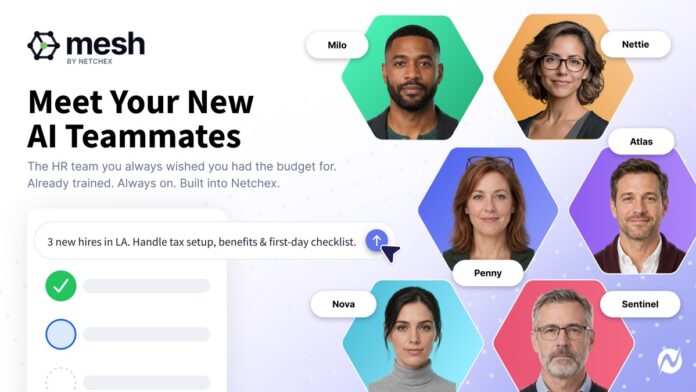
Mesh AI Teammates

Netchex has launched Mesh, a team of six AI HR “teammates” built to handle payroll, compliance, scheduling, and everyday HR work before anyone has to ask. Announced on July 20, 2026, from the company’s Covington, Louisiana, headquarters, Mesh is aimed squarely at the deskless workforce in restaurants, hotels, dealerships, and healthcare practices where most staff never sit in front of a computer.

It is a pointed move in a market crowded with AI that mostly waits to be asked a question. Netchex’s pitch is the opposite. Mesh watches the data, spots the problem, and gets the work moving on its own, with humans stepping in only to approve the decisions that matter.

What is Netchex Mesh?

Mesh is a set of AI HR agents embedded in the Netchex payroll and human capital management (HCM) platform. Rather than functioning as a single chatbot, it is structured as a team of six specialists that continuously monitor payroll, scheduling, time, and HR data, with each one owning a complete workflow from start to finish.

The core idea is that these agents anticipate problems and complete work before staff flags it, a step beyond the ask-and-answer chatbots that define most AI in HR today.

As Saurabh Nangia, Chief Product Officer of Netchex and founder of Mesh.ai, put it, most AI so far mostly just answers questions when asked, while Mesh is designed to get ahead of the work and handle the tasks people dislike doing.

Mesh builds on Netchex’s acquisition of Mesh.ai, a Y Combinator–backed, AI-first performance and engagement platform. After the acquisition, the Mesh.ai team set out to scale the technology across every workflow an HR team touches, and built the AI teammates announced at launch.

Meet the six AI HR teammates

The founding roster is made up of six named agents, each handling a distinct slice of HR operations:

  • Penny — a payroll assistant that chases missing timecards and flags payroll issues.
  • Atlas — a people ops coordinator that connects onboarding, status changes, documents, and approvals.
  • Sentinel — a compliance and risk analyst that watches for patterns and gaps teams don’t have time to catch.
  • Nova — a workforce analyst that turns scattered data into signals managers can act on.
  • Milo — an employee concierge that files PTO, arranges shift coverage, pulls pay stubs, and answers policy questions instantly.
  • Nettie — a service partner that troubleshoots issues and answers product questions for admins, drawing on Netchex’s knowledge articles and training resources.

Netchex has described these six as the founding roster and says it plans to add more teammates over time.

Why Mesh targets the deskless workforce

Most HR software is built for the corporate office, but that is not where a huge share of the real economy actually works.

In a restaurant group, a hotel, a dealership, or a healthcare practice, roughly 80% of employees never sit at a desk. Shift swaps happen over group texts, timecards come in late, and the HR teams behind these operations tend to be lean and stretched thin often a single admin running payroll, approving timecards, fielding PTO requests, and onboarding new hires, all before lunch.

Netchex’s argument is that because Mesh sees across pay, scheduling, time, and HR in one platform, it can connect dots that fragmented tools miss. The company gives two examples: flagging a scheduling pattern that is quietly turning a strong employee into a flight risk, and catching expiring technician certifications weeks before they open up a staffing gap.

You may also be interested in Best HR Management Software for HR Managers.

Mesh works inside ChatGPT and Claude

One of the more notable details is where Mesh operates. Beyond the Netchex platform itself, employees can file PTO, swap shifts, and check pay stubs directly inside ChatGPT or Claude.

Managers can spot overtime trends and approve requests, and admins can run payroll audits and pull headcount reports without opening Netchex at all. Netchex says nothing sensitive is submitted without human approval.

That approach, meeting workers inside the AI assistants they may already be using, reflects a broader shift in how workplace software is being delivered, moving the point of interaction to where people already are rather than forcing them into yet another dashboard.

Early results and the wider AI agent trend

Netchex says customers in its early access program have won back roughly half of their Monday admin time and seen a double-digit drop in payroll corrections. The company describes these as directional results from early access rather than audited benchmarks, so they should be read as early indicators rather than guaranteed outcomes.

The launch lands amid a broader industry push toward task-specific AI agents. Netchex points to a Gartner projection that 40% of enterprise applications will feature task-specific AI agents by 2026, up from less than 5% in 2025 a signal that the “agentic” approach Mesh represents is moving quickly from novelty to expectation.

“Our mission has always been to build the best software and support for deskless industries,”

said Abhinav Agrawal, CEO of Netchex, framing AI teammates as a way to give smaller operators the kind of bench strength usually reserved for far larger companies.

What it means for businesses

For lean HR teams, the appeal of a tool like Mesh is straightforward: less time lost to routine prep and error-chasing, and more attention freed up for the work that actually needs a human.

The proactive, agent-based model is also part of a larger trend that businesses everywhere, including across emerging markets in Asia, Africa, and Nigeria, where frontline and deskless labor dominates many sectors and HR functions are often small and overstretched, will be watching closely as it matures.

For now, Mesh is a US-focused rollout beginning with early access, and the headline efficiency figures come from Netchex’s own early data. But as a marker of where HR software is heading, from tools that answer questions to agents that quietly do the work, it is a launch worth paying attention to.

Mesh is rolling out to Netchex customers, starting with early access. Businesses can meet the AI teammates or request a demo at netchex.com/mesh.

Also Read: Best Payroll Software for Small Business.

A $2,100 CPU Just Beat a $40,000 GPU Rig at Cracking Password — Here’s Why That Matters

0
Matrix-inspired code on a laptop keyboard
Photo by Rafael Minguet Delgado on Pexels.com

New research has produced a result that upends a piece of common wisdom in cybersecurity. When it comes to cracking passwords protected by the Argon2 algorithm, a single server processor costing about $2,100 outran a rig of eight high-end graphics cards worth more than $40,000. For years, the rule of thumb has been that more GPUs mean faster cracking. Against Argon2, that rule breaks, and understanding why says a lot about how modern passwords are actually protected.

The findings come from time-to-crack research published by Specops Software, an Outpost24 company, on 16 July 2026. The study tested how Argon2, the algorithm that won the 2015 Password Hashing Competition, holds up against the kind of hardware attackers use today.

What is Argon2, and why is it so hard to crack?

When a service stores your password, it does not (or should not) store the actual characters. Instead, it stores a “hash”, a scrambled output produced by a one-way algorithm. When you log in, the service hashes what you typed and checks whether it matches.

Attackers who steal a database of hashes then try to reverse them by guessing billions of passwords per second and hashing each guess until one matches.

The speed of that guessing depends heavily on the algorithm. Older hashes like SHA256 are fast to compute, which is great for performance but terrible for defence, because it lets attackers test enormous numbers of guesses cheaply.

Argon2 was designed to do the opposite. It is memory-hard, meaning each hash calculation demands a large chunk of memory, not just raw processing power. That single design choice strips away most of the advantage attackers buy when they stack up graphics cards.

Argon2 comes in variants, and the research focused on Argon2id, the recommended general-purpose version.

Argon2 vs SHA256: the numbers that show the gap

To measure the difference, the Specops team tested Argon2id on a rig of eight Nvidia RTX 5090 graphics cards, the same class of hardware cloud providers rent out for around five dollars an hour.

The results were stark:

  • Argon2id managed just 490 hashes per second.
  • SHA256 managed around 221 billion hashes per second on the same equipment.

That makes Argon2id roughly 451 million times slower to crack than SHA256. Put in plain terms: a password that takes one second to hash with SHA256 would hold out for more than 14 years under Argon2id. For anyone trying to brute-force a strong, random password on a GPU rig alone, the task becomes effectively unrealistic.

The twist: where the cost curve bends

Here is where the research gets counterintuitive. Argon2’s memory-hard design punishes GPUs specifically, but a well-matched processor is a different story.

Using a tool called mdxfind, the team hit 730 hashes per second on a single AMD EPYC server processor costing about $2,100, actually outpacing the eight-card GPU rig, where each card alone costs upwards of $5,000.

Against Argon2, raw GPU spending simply stops buying speed. Cheap, well-suited hardware can still recover some hashes, and it can do so more efficiently than a far more expensive graphics setup.

The lesson for defenders is subtle but important: stronger hashing raises the cost of an attack, but it does not remove the risk. Determined attackers with the right hardware can still make progress.

You may also be interested in Cybersecurity Best Practices Every Business Must Follow.

The catch: Argon2 can’t protect a password that an attacker already has

There is a much bigger limitation that no hashing algorithm can solve. All of this maths about cracking speed only matters if the attacker has to guess the password in the first place. It does nothing for a password an attacker already holds.

If your password has leaked in a previous data breach, been captured through a phishing attack, or harvested by an infostealer infection on your device, the strength of the hashing algorithm is irrelevant. The attacker simply logs in. Weak and predictable passwords can also still be guessed quickly, regardless of the algorithm behind them.

That is why strong hashing has to sit inside a wider security strategy rather than stand in for one.

“Argon2 is a real step forward that makes brute forcing far more expensive than older algorithms,”

said Darren James, Senior Product Manager at Specops Software.

“But harder is not the same as impossible, and no hashing algorithm can protect a password an attacker already has. Strong hashing needs to be combined with policies that prevent weak, predictable and already-compromised passwords from being used.”

What you should do about it

The research points to a few practical takeaways for individuals and, especially, for organizations:

  1. Use long passwords. The study recommends a minimum length of 15 characters. Length is one of the most reliable ways to push cracking time out of reach.
  2. Don’t reuse passwords. A password exposed in one breach becomes a key that unlocks every other account where it was reused. A password manager makes long, unique passwords practical.
  3. Screen against compromised credentials. For businesses, the most effective defense is to block passwords that are already known to be exposed. Specops’ research lands alongside an update to its Breached Password Protection service, which added more than 60 million newly compromised passwords gathered from the company’s honeypot network and threat intelligence sources. The service checks passwords in Active Directory against known breached credentials and prompts users to change exposed ones before attackers can use them.

Also read: Best eCommerce Cybersecurity Tools.

The bottom line

Argon2 is genuinely one of the strongest password-hashing algorithms available, and this research confirms it dramatically raises the cost of brute-force attacks compared to older options like SHA256. But two things are worth remembering. First, “harder to crack” is not the same as “uncrackable”; a modestly priced, well-matched CPU can still outperform an expensive GPU rig against it. Second, and more important, no algorithm can defend a password that has already been stolen or reused.

Strong hashing protects the vault. Good password habits and breach screening make sure the attacker never gets the key in the first place.

Nigeria’s Remote Hiring Boom: Solving the Hidden Identity Problem

0
Jobs and Career

Nigeria has become one of the world’s busiest remote-hiring markets. Every day, engineers in Lagos, designers in Abuja and support agents in Port Harcourt are hired by companies in the US, UK and Europe they will never visit in person.

That borderless opportunity is reshaping careers and pulling in foreign currency, but it also exposes a gap almost nobody plans for: when you hire someone you have never met, how do you actually know they are who they say they are?

As artificial intelligence makes impersonation cheap and convincing, that question is turning employee onboarding into a genuine security risk, and identity verification for remote hiring in Nigeria is quickly moving from a nice-to-have to a necessity.

Nigeria is now a global remote-hiring powerhouse

The scale of Nigeria’s remote-work boom is hard to overstate. Industry estimates put the country’s active developer population above 100,000, the largest in Africa, sitting within a technology ecosystem valued at more than $15 billion.

Lagos was ranked among the fastest-growing tech ecosystems in the world in 2025, and platforms that place African talent report explosive growth in Nigerian candidates over the past five years.

The demand side is just as strong. Korn Ferry has projected a global tech-talent shortage of around 85 million workers by 2030, and employers hiring from Nigeria can typically cut role costs by 40 to 60 percent compared with equivalent US or UK hires.

Add a young, English-speaking population, more than half of it under 25, and roughly 600,000 university graduates a year, plus government skills drives like the 3 Million Technical Talent (3MTT) programme, and Nigeria has become a default destination for building remote and outsourced teams.

Nigerian firms themselves increasingly hire remotely too, onboarding contractors and staff across states and borders without a single in-person meeting.

The hidden problem: hiring people you never meet

Almost all of this hiring runs through a process that was built for speed, not identity assurance. In distributed hiring, IT is routinely asked to provision accounts for people it has never met.

A temporary password gets emailed out, a manager hands off access, a service-desk agent resets a credential, and at nearly every step, identity is assumed rather than verified.

That was tolerable when impersonating a new hire took real effort. It no longer does. AI-powered voice cloning, deepfake video and automated phishing have collapsed the cost of pretending to be someone else, and they scale effortlessly.

The weakest link in remote hiring, the moment a stranger is granted trusted access to systems and data, is now an easy and attractive target.

Fake workers are already exploiting the remote pipeline

This is not a hypothetical worry. The 2026 Verizon Data Breach Investigations Report (DBIR) documented North Korean IT-worker schemes in which operatives used stolen identities and regionally hosted “laptop farms” to land real jobs at real companies, estimating that these operations may have leveraged as many as 15,000 stolen identities.

Separately, fraud-prevention firm Sift has reported that AI now assists more than 82 percent of phishing emails, showing how central automation has become to social engineering.

The uncomfortable detail for this region is that fake-worker schemes exploit exactly the remote-hiring rails that Nigerian professionals rely on. The same “hire someone you never meet” model that lets a developer in Enugu work for a startup in Berlin is the model fraudsters abuse with stolen or synthetic identities.

Left unchecked, that risks casting a shadow of suspicion over legitimate African applicants, which is precisely why verification matters for honest job seekers, not just for employers.

Why identity verification matters on both sides in Nigeria

The identity problem in remote hiring cuts two ways, and both are relevant to Nigeria.

For employers, whether a foreign company hiring Nigerian talent or a Nigerian business onboarding remote staff, verifying identity at onboarding is a first line of defence against fraud, stolen credentials and fake workers slipping into trusted roles.

For job seekers, robust verification is protection, not obstruction. A candidate who can quickly and securely prove they are a real, present person stands apart from the fakes and clears the suspicion that fraud schemes create for everyone else. In a market competing on trust as much as skill and price, being easy to verify is becoming a competitive advantage.

What identity verification at onboarding looks like

The security industry’s answer is to stop treating verification as something that happens once, at the perimeter, and instead build it into the moments where identity was previously taken on trust. A recent example is Specops Secure Onboarding, launched in July 2026 by Specops, an Outpost24 company, which illustrates the model well.

Instead of a temporary password sent over email or chat, new employees set their own first Active Directory password through a secure enrollment link, verifying their identity with biometric liveness detection checked against a government-issued ID.

Liveness detection is designed to confirm a real, present person is completing the check, not a photo, a recording, or a deepfake, which is exactly the attack AI has made easier.

The check reportedly supports more than 16,000 document types across 254 countries and territories, stores no end-user data, and allows callers to be re-verified before sensitive service-desk actions within existing ServiceNow, Jira, and other ITSM tools, with every verification logged for audit.

“Stolen identities, remote hiring processes, and AI-enabled impersonation are changing where identity risk begins.”

said Darren James, Senior Product Manager at Specops, arguing that verification now needs to start with the very first password and continue through high-risk support interactions.

The takeaway for Nigerian employers and job seekers

Nigeria’s remote-hiring boom is a genuine economic win, and it is not slowing down. But the same rails that carry that opportunity also carry risk, and AI has tilted the odds toward whoever is willing to fake an identity. The practical response is simple to state: verify first.

Employers, local and foreign, should build real identity checks into onboarding rather than assuming identity after an account already exists. Job seekers should expect, and welcome, verification as the thing that separates them from the fakes.

As impersonation keeps getting cheaper, “trust, then verify” is starting to look like an open door, and verifying first is fast becoming the safer default for everyone hiring and being hired across Nigeria.

Frequently asked questions

What is the identity problem in remote hiring? Remote hiring often grants system access to people the employer has never met in person. Because temporary passwords, access handoffs, and service-desk requests usually assume identity rather than verify it, a fraudster using a stolen or AI-generated identity can slip into a trusted role, which is the core identity problem in remote and outsourced hiring.

Why is this a growing risk in Nigeria? Nigeria is one of the world’s largest remote-talent markets, with employers routinely hiring staff and contractors they never meet face to face. That scale, combined with AI-driven impersonation, makes strong identity verification for remote hiring in Nigeria increasingly important for both employers and legitimate job seekers.

What are fake-worker schemes? Fake-worker schemes involve operatives using stolen or synthetic identities to secure legitimate jobs, sometimes to earn income and sometimes to gain insider access to company systems. The 2026 Verizon DBIR linked North Korean operations of this kind to an estimated 15,000 possible stolen identities.

How does identity verification at onboarding work? Modern onboarding verification typically has a new hire set their own first password through a secure enrollment link and prove their identity using biometric liveness detection against a government-issued ID. Callers can also be re-verified before sensitive service-desk actions, with each check logged for audit.

Does identity verification hurt genuine Nigerian applicants? No. Fast, secure verification actually protects honest applicants by proving they are real and present, helping them stand apart from fraudulent candidates and reducing the suspicion that fake-worker schemes create across the market.

Loans, Cash Grants, Skills, and Jobs: 20 FG Youth Empowerment Programmes You Should Be Applying For in 2026

0
FG Youth Empowerment Programmes in Nigeria

If you are a young Nigerian trying to fund your education, learn a tech skill, land a job, or raise capital for a business, here is something you may not fully realise: the Federal Government currently runs more youth empowerment programmes than at any point in recent memory. Interest-free student loans, free skills training with monthly stipends, ₦1 million startup grants, digital work platforms, and multi-billion-naira entrepreneurship funds are all on the table right now and a surprising number of them go under-subscribed simply because eligible youth never hear about them or assume the process is too complicated.

The catch is that opportunity does not chase anybody. These schemes reward the youth who show up early, apply correctly, and keep their documents (NIN, BVN, JAMB number, passport photograph) ready.

This guide breaks down 20 active federal programmes what each one actually gives you, who qualifies, and how to get in. Bookmark it, share it, and treat it as a checklist. One of these could be the turning point in your career or business.

Quick note before you start: Government programmes open and close in cohorts, and figures like stipend amounts and slot numbers sometimes change between phases. Always confirm the latest requirements and deadlines on each programme’s official portal (listed under every section) before applying, and never pay anyone who claims they can “process” a free government programme for you.

You may also be interested in Freelancing: A Potential Solution for Unemployment.

1. Student Loan for Tertiary Education (NELFUND)

What it offers: The Nigerian Education Loan Fund (NELFUND) gives an interest-free loan to students in public tertiary institutions, covering tuition (paid directly to your school) plus an optional monthly upkeep allowance paid into your account. It exists so that no qualified Nigerian drops out of school because of money.

Who qualifies: You must be a Nigerian citizen enrolled in a federal or state university, polytechnic, monotechnic, or college of education (private-institution students are not covered as of 2026). You need a valid NIN and BVN, plus your JAMB registration number (fresh students) or matriculation number (returning students).

Crucially, your institution must first upload and verify your details on the NELFUND Student Verification Portal. If your school has not done this, contact your bursary, registry, or ICT unit before you apply. Applicants convicted of fraud, exam malpractice, or cultism, or who have defaulted on a previous loan, are disqualified.

Important to know: The loan is genuinely interest-free with no application fees. Repayment begins only after you graduate and complete NYSC, and once you have secured employment (typically structured as a modest salary deduction).

If you remain unemployed after service, you notify NELFUND periodically rather than being forced to pay. Apply early in the cycle, as institutional verification is the most common cause of “pending” delays.

Apply at: portal.nelf.gov.ng

2. Technical and Vocational Education and Training (TVET)

What it offers: Run by the Federal Ministry of Education, TVET offers tuition-free, hands-on training (roughly 90% practical, 10% theory) in over 25 in-demand trades like welding, electrical installation, fashion design, ICT, catering, and more, plus a monthly stipend, a nationally recognized certificate, and startup support on completion.

Who qualifies: It is open to virtually any Nigerian, with or without formal education, job seekers, school leavers, and graduates alike. You will need a valid NIN and BVN. There are two tracks: the Short-Term Certificate (STC) programme (about 6 months, no prior qualification required) and the Vocational Education & Innovation (VEI) programme (about 1 year, for those with some prior education or informal training who want to formalise their skills). Biometric attendance is required to receive stipends.

Important to know: The programme is funded through NELFUND, and the stipend is a grant, not a loan you do not pay it back. The stipend figure has been quoted as ₦45,000 in the original policy announcement, though some 2026 cohort communications reference ₦22,500, so confirm the current amount for your intake on the portal. Training is held at accredited centers across all six geopolitical zones.

Apply at: tvet.education.gov.ng

3. 3 Million Technical Talent (3MTT)

What it offers: A NITDA-led programme under the Federal Ministry of Communications, Innovation & Digital Economy aiming to train three million Nigerians in high-demand technical skills including software development, data analysis, data science, UI/UX design, product management, cybersecurity, cloud computing, AI/ML, and game development. Selected fellows get a fully funded scholarship, self-paced and applied learning, community support, and job-placement facilitation.

Who qualifies: Open to Nigerians with an interest in tech, from beginners to those with intermediate skills (some advanced tracks have prerequisites). Fellows are selected across all 36 states and the FCT, so location is not a barrier. Applications run in cohorts, so timing matters. Watch the portal for the next intake.

Important to know: Beyond training, 3MTT actively connects fellows to internships and jobs through its placement network of partner organisations, which is what makes it stand out from ordinary online courses. If you are serious about a tech career and cannot afford expensive bootcamps, this is one of the highest-value programmes on this list.

Apply at: 3mtt.nitda.gov.ng

4. Nigerian Youth Academy (NiYA) Startup Grants

What it offers: Under the Federal Ministry of Youth Development, NiYA provides seed funding to youth-led businesses in the form of ₦1 million grants for youth-led startups and ₦500,000 for informal-sector beneficiaries, alongside mentorship and enterprise support. The linked NiYA Startup Pitch programme has run competitive rounds offering millions in funding to selected founders.

Who qualifies: NiYA is generally open to Nigerian youth aged 18–35, with at least a secondary school certificate, who register on the NiYA platform. For the grant and pitch components, you typically need a genuine business or a scalable idea, a structured team, and a clear plan. Selection is competitive.

Important to know: Start by registering on the NiYA platform to access the wider ecosystem (free skills courses, community, jobs, and gigs), then apply to the specific funding call when it opens. Because grants are competitive and cohort-based, a well-prepared pitch and complete profile significantly improve your chances.

Learn more at: yid.fmyd.gov.ng/project-initiatives

5. NiYA Gigs Digital Work Platform

What it offers: A freelancing platform built specifically for Nigerian youth, connecting you to paid gigs from local and international clients while handling payments in a system tailored for Nigeria. It targets skills like writing, graphic design, programming, digital marketing, virtual assistance, and social media management.

Who qualifies: Any skilled young Nigerian who registers on the platform and creates a profile showcasing their services. There is no fee to join; your portfolio and skills are what win you work.

Important to know: Think of NiYA Gigs as a government-backed alternative to global freelance marketplaces, designed to remove the payment and access barriers Nigerian freelancers often face. Pair it with a skill acquired through 3MTT, TVET, or NiYA Academy and you have a direct path from training to income.

Learn more at: gigs.niya.gov.ng

6. Digital Literacy for All (DL4ALL)

What it offers: A national initiative, delivered in partnership with NITDA, working toward 70% digital literacy in Nigeria by 2027. It equips citizens with the essential digital skills needed to participate in today’s economy, from basic computer and internet use to more advanced digital competencies.

Who qualifies: Broadly open to Nigerians, with a particular focus on reaching youth and underserved communities. Training is designed to be accessible regardless of prior background.

Important to know: Even if you already consider yourself tech-savvy, DL4ALL is a useful gateway to more advanced programmes like 3MTT, because it builds and certifies the foundational skills employers increasingly expect. It also signals where the government is investing, so keep an eye on it for free training rollouts.

Learn more at: dl4all.nitda.gov.ng

7. Labour Employment and Empowerment Programme (LEEP)

What it offers: A Federal Ministry of Labour and Employment initiative aiming to create 2.5 million jobs through several pillars: a national job portal connecting seekers to employers, a digital academy for online skills, vocational and entrepreneurship training, global-workforce and migration pathways, and physical job fairs.

Who qualifies: Any Nigerian seeking employment, skills development, or entrepreneurship opportunities can register. It is one of the more open programmes on this list, with no narrow qualification barrier.

Important to know: Completing LEEP training earns you certificates you can showcase to employers, and the platform pairs participants with mentors. If your goal is a job (including access to global job markets) rather than a grant, LEEP’s job portal is a strong first stop.

Learn more at: leep.gov.ng

8. NDE Renewed Hope Employment Initiative (RHEI)

What it offers: Run by the National Directorate of Employment, RHEI delivers free vocational, digital, agricultural, and entrepreneurial training, along with a monthly stipend during training, a certificate of completion, starter packs (tools), and access to low-interest business loans. Earlier phases trained and resettled tens of thousands of youth nationwide.

Who qualifies: Broadly inclusive unemployed or underemployed Nigerians, typically aged 18–45, including school leavers, graduates, artisans, women, persons with disabilities (with reserved slots), and rural dwellers. You need a valid NIN and a passport photograph; no specific educational qualification is required for most tracks.

Important to know: Training centres are located in all 36 states and the FCT, so you can learn close to home. Applications run in phases with firm deadlines and high demand, so register early on the official portal and keep your dashboard and email active for shortlisting updates.

Learn more at: nde.gov.ng

9. CNG-Powered Tricycle Empowerment Scheme

What it offers: Also known as the Presidential initiative on CNG-powered Tricycles (Pi-CNG), it is a scheme aimed at distributing thousands of Compressed Natural Gas (CNG)-powered tricycles to Nigerian youth, tied to the government’s cheaper-transport and clean-energy agenda. Beneficiaries get an income-generating asset that runs on lower-cost fuel than petrol.

Who qualifies: Aimed at youth seeking a livelihood in transport. Requirements generally include valid identification and, in many rollouts, membership of a recognised transport union or cooperative, plus a commitment to the scheme’s repayment or hire-purchase terms where applicable.

Important to know: Because these are physical assets distributed in limited batches, allocation is often coordinated through state structures and unions. Confirm the current eligibility and any repayment model on the official channel, and go through recognised, official points of registration only.

Learn more at: youthcng.ng

10. Youth Investment Fund (YIF)

What it offers: A dedicated fund providing financial support to young Nigerian entrepreneurs to start or scale their businesses, part of the government’s broader push to move youth from job-seeking to job-creating.

Who qualifies: Aimed at young entrepreneurs with viable business ideas or existing small businesses. Specific eligibility (age band, business documentation, and required guarantees) is set per funding round, so check the portal for the active criteria.

Important to know: Funds like this typically require a registered business or a solid business plan, valid identification, and a bank account in the applicant’s or business’s name. Prepare these in advance so you can apply the moment a cycle opens.

Learn more at: nyif.nmfb.com.ng

11. National Youth Development Bank (NYDB)

What it offers: A financial institution established to give young entrepreneurs and innovators structured access to capital loans and financing designed around the realities of youth-led businesses rather than the strict collateral demands of conventional banks.

Who qualifies: Young Nigerian entrepreneurs and innovators. As with any lender, expect requirements around identification, business registration, or a bankable plan, and repayment capacity once the bank’s products are fully rolled out.

Important to know: The NYDB is part of the same ecosystem as NiYA and the Youth Investment Fund, so it is worth tracking all three together. Follow the official channel for product launches and application windows, and be wary of imitation “youth bank” schemes circulating on social media.

Learn more at: nydb.gov.ng

12. Yo! Health Youth Initiative

What it offers: A national campaign promoting health and wellness among young Nigerians, covering physical health, mental well-being, and healthy-lifestyle awareness, and creating avenues for youth to engage as participants and advocates.

Who qualifies: Open to Nigerian youth generally. Roles range from simply accessing health information and services to volunteering, advocacy, and ambassador-style participation.

Important to know: While it is not a cash-grant scheme, Yo! Health is valuable for youth interested in the health and development sector, offering exposure, networks, and volunteering experience that strengthen a CV. It also complements skills programmes by keeping the workforce healthy and informed.

Learn more at: yohealth.gov.ng

13. Ministry of Steel Development Youth Bootcamp

What it offers: A training bootcamp equipping young Nigerians with skills in metallurgy, industrial welding, and mechanical design, technical competencies directly tied to Nigeria’s push to revive its steel and heavy-industry sector.

Who qualifies: Youth interested in industrial and engineering trades. Specific entry requirements (age, minimum education, or aptitude screening) are set per cohort, so verify on the official channel before applying.

Important to know: This is a niche but high-value opportunity because industrial welding and metallurgy skills are in short supply and command strong pay, both locally and abroad. If you have an aptitude for hands-on technical work, this bootcamp can position you for well-paid roles in construction, manufacturing, and energy.

14. Nigeria Health Fellows

What it offers: A fellowship that trains and employs young Nigerians to strengthen the country’s healthcare workforce, having placed hundreds of youth into roles that support the health system.

Who qualifies: Typically aimed at young people with relevant health, science, or allied backgrounds, though specific tracks and entry criteria vary by cohort. Because it leads to employment, expect a competitive, structured selection process.

Important to know: Unlike training-only schemes, this fellowship pairs capacity-building with actual placement, making it especially attractive for health-sector graduates and aspirants. Watch the portal for open calls and prepare your credentials and CV to apply promptly.

Learn more at: healthfellows.ng

15. Reimagining Hope Creative Residency

What it offers: A residency programme empowering young Nigerian creatives across film, music, fashion, and tech, providing structured support, mentorship, and a platform to develop and showcase their work.

Who qualifies: Young creatives with demonstrable talent or projects in the target industries. Selection is usually portfolio- or project-based, so your body of work matters more than formal qualifications.

Important to know: Nigeria’s creative economy is one of its fastest-growing sectors, and residencies like this offer exposure and networks that are hard to buy. If you are a filmmaker, musician, designer, or creative technologist, prepare a strong portfolio and apply when the call opens.

16. NextGen Resilience Corps

What it offers: A youth mobilisation initiative focused on climate change, environmental sustainability, and local innovation engaging young people as active contributors to green projects and community-level solutions.

Who qualifies: Nigerian youth passionate about the environment, sustainability, and innovation. Participation may involve volunteering, project work, and skills-building around green solutions.

Important to know: “Green skills” and climate-focused experience are increasingly valued by employers, NGOs, and international programmes. Joining the Corps builds both impact and a differentiated profile, and can open doors to further climate-sector opportunities and funding.

17. Stockholm Junior Water Prize Nigeria

What it offers: The Nigerian arm of a prestigious international competition challenging teenagers to develop innovative solutions in water management and environmental sustainability, with winners advancing to represent Nigeria on the global stage.

Who qualifies: Nigerian teenagers (typically secondary-school-age students) with a research project or innovation addressing water and environmental challenges. Entry is project-based, so a well-documented, original idea is key.

Important to know: This is a standout opportunity for younger students who want international recognition, mentorship, and a serious line on their record before university. Teachers and school science clubs are often the best route in, so involve a mentor early.

18. SMEDAN Creative and Garment Studios

What it offers: Through the Small and Medium Enterprises Development Agency of Nigeria (SMEDAN), these studios empower young Nigerians in the creative economy and fashion industry with training, workspace, tools, and enterprise support to build viable businesses.

Who qualifies: Youth interested in fashion, garment-making, and creative enterprise. SMEDAN programmes generally favour applicants ready to run or grow a business, and may require business registration or a clear plan for the funded/supported tracks.

Important to know: SMEDAN is a long-standing agency with a track record of MSME support, which makes its youth-focused studios a comparatively established option. Explore its wider portfolio of grants, training, and business-formalisation services while you are on the portal.

Learn more at: smedan.gov.ng

19. NDDC Youth Entrepreneurship Fund

What it offers: The Niger Delta Development Commission has committed ₦30 billion to youth entrepreneurship in the Niger Delta region, aimed at funding and supporting young-led businesses across the oil-producing states.

Who qualifies: Youth from or operating in the Niger Delta region, with viable business ideas or existing enterprises. Expect requirements around identification, regional eligibility, and business documentation set per funding call.

Important to know: If you are based in the Niger Delta (including Rivers, Bayelsa, Delta, Akwa Ibom, Cross River, Edo, Abia, Imo, and Ondo), this is a region-specific fund worth prioritising, since competition is limited to a defined pool rather than the whole country. Confirm the active application window on the NDDC portal.

Learn more at: nddc.gov.ng

20. AfDB $100 Million Loan for Youth and Women-Led Enterprises

What it offers: A financing facility backed by the African Development Bank targeting tens of thousands of youth-led (and women-led) businesses with access to capital and business support, channelled through Nigerian financial partners.

Who qualifies: Youth- and women-led enterprises in Nigeria, typically accessed through participating banks or approved intermediaries rather than directly from AfDB. Standard requirements around business registration, financial records, and a fundable plan usually apply.

Important to know: Because this facility is disbursed via partner institutions, the practical step is to identify the participating Nigerian banks or programmes distributing it and apply through them. It is a reminder that some of the biggest capital pools for youth come through development-finance partnerships, not just direct government portals.

Learn more at: afdb.org

Conclusion: Opportunity Is Here — Your Move

Twenty programmes, one common thread: the Nigerian government and its partners are actively putting money, skills, tools, and jobs within reach of young people who are willing to apply. Whether your immediate need is funding your education (NELFUND), learning a paid skill (TVET, 3MTT, DL4ALL), earning online (NiYA Gigs, LEEP), raising business capital (NiYA grants, YIF, NYDB, NDDC, AfDB), or building a niche career in health, steel, the creative economy, or climate work, there is almost certainly an entry point on this list for you.

The youth who benefit are rarely the most connected or the most brilliant; they are the ones who prepare their documents early, apply the moment a cohort opens, follow instructions carefully, and refuse to pay touts for what is genuinely free. So pick two or three programmes that fit your goals, get your NIN, BVN, JAMB number, bank details, and passport photograph ready, and start today. And do one more thing: share this list. Somebody in your network is one application away from changing their story.

Jumia Still Owns Nigeria: Why 84% of Shoppers and 83% of Businesses Choose One Marketplace

0
Jumia still owns Nigeria

In most of the world, “online marketplace” means Amazon. In Nigeria, it means Jumia, and the gap is not close.

According to DHL eCommerce’s E-Commerce Trends Report 2026, which also ranks Nigeria 4th in the use of AI in Shopping, Jumia is the most popular online marketplace for both Nigerian shoppers and Nigerian businesses, used by 84% and 83% respectively. That dual dominance makes Nigeria one of a small handful of surveyed markets where a homegrown platform, rather than a global giant, sits at the centre of e-commerce on both sides of the transaction.

The report is based on responses from 29,000 shoppers and 5,800 businesses across 29 countries, gathered between December 2025 and February 2026, with 1,000 shopper respondents per market. Its country-level marketplace data tells a story about Nigeria that runs counter to the assumed direction of global e-commerce, and it comes with a warning attached.

One Platform, Both Sides of the Market

Jumia’s position in Nigeria is unusual precisely because it is balanced. Eighty-four percent of Nigerian shoppers name it as their most-used marketplace, and 83% of Nigerian businesses name it as their primary selling platform. Shopper demand and seller supply are pointing in the same direction.

That alignment matters more than the raw percentages. One of the report’s central themes is a persistent gap between where shoppers want to buy and where businesses choose to sell. Globally, the report finds that adoption of challenger platforms is accelerating faster than businesses are adapting, widening the gap between consumer behaviour and business focus. Nigeria does not have that problem with its lead marketplace. Sellers are where the buyers are.

How Nigeria Compares to the Rest of the World

Set against the global marketplace map, Nigeria’s Jumia loyalty looks distinctly regional rather than typical.

Amazon dominates most of the surveyed markets on both sides. It is the top platform for shoppers and businesses in the USA (85% / 87%), Canada (89% / 73%), the UK (87% / 78%), Germany (86% / 87%), the UAE (84% / 87%), India (94% / 94%) and Australia (68% / 92%), among others.

Where Amazon does not lead, the pattern is almost always the same: a strong local or regional player fills the gap. Nigeria’s Jumia sits alongside Takealot in South Africa (88% shoppers / 87% businesses), Mercado Libre in Argentina (93% / 98%), Shopee in Thailand (90% / 100%) and Malaysia (96% shoppers), Taobao in China (67% / 77%), and Allegro in Poland (89% / 92%).

This shows that this is part of a global pattern in which regional champions own markets that global platforms have not managed to dominate. Jumia’s advantage is built on the same foundations as those of other champions: local logistics, local payment processing, and a catalog tuned to the market it serves.

Nigerians Expect to Buy More on Marketplaces, Not Less

The forward-looking data suggests Jumia’s position is not a legacy habit fading out. It is strengthening.

Sixty-seven percent of Nigerian shoppers expect to buy more through online marketplaces over the next five years, one of the highest figures in the survey, and roughly double the global average of 34%. Only 6% expect to buy less. The appetite is not softening; it is intensifying.

Nigerian businesses see the same trajectory. Seventy-seven percent expect their customers to shop more on marketplaces over the coming five years, against a 54% global average, with just 3% expecting a decline. Both numbers rank among the strongest recorded in the study.

The report notes that, globally, marketplaces show the closest alignment between shopper and business expectations of any channel: 34% of shoppers versus 54% of businesses expect to use them more, making them, in DHL’s words, a strong foundation for growth. In Nigeria, both figures are far higher and even more tightly aligned, which points to marketplaces being the single most reliable channel for Nigerian e-commerce growth over the medium term.

The Broader Nigerian Marketplace Picture

Marketplaces do not operate in isolation in Nigeria, and the report is clear that they sit within an unusually multi-channel environment. Nigerian shoppers and businesses consistently outperform the global average across nearly every platform. The report explicitly groups Nigeria alongside Türkiye and Malaysia as markets that outperform the global norm across all channels.

Social commerce runs alongside the marketplace habit rather than competing with it: 86% of Nigerian shoppers buy through Facebook, well above the 63% global average. Apps are climbing too, with 66% of Nigerian shoppers expecting to buy more via apps over five years. And 58% expect to buy more from international retailers, against 45% globally.

For a platform like Jumia, this is both context and competition. The Nigerian shopper is not loyal to a single channel. They are loyal to convenience, and they move fluidly between marketplace, social feed and app depending on what is fastest.

The Warning Attached: Loyalty Ends at the Doorstep

Here, the report’s global findings complicate the comfortable narrative. Marketplace dominance does not insulate a platform from the two things Nigerian shoppers care about most: delivery and trust.

Seven in ten shoppers globally say they will not buy from a brand they do not trust to deliver, and the same proportion will abandon a cart if they are not offered the delivery and returns options they want at checkout.

In Nigeria specifically, delivery preferences are already diversifying: while 78% still opt for home delivery, 51% now return unwanted goods via parcel shops or convenience stores, and 15% via parcel lockers. The market is shifting toward out-of-home logistics faster than a home-delivery-only model can serve.

Muyiwa Adeseyoju, Country Manager of DHL Express Nigeria, put the underlying point directly, noting that delivery, trust and flexibility are no longer add-ons but central to customer experience, and that long-term growth depends on delivering consistently and building customer confidence.

For Jumia and its challengers, the implication is straightforward. Market share at the point of discovery is not the same as loyalty at the point of delivery. The platform that owns the Nigerian marketplace today will keep it only as long as it owns the last mile, and on that front, the report shows Nigerian shoppers are already exploring their options.

What This Means for Nigerian Retailers and Sellers

The strategic reading for anyone selling in Nigeria is that the marketplace channel is the safest bet for growth, and Jumia remains its centre of gravity. But three qualifiers apply.

First, a marketplace presence is necessary but not sufficient; the same shoppers who use Jumia are buying on Facebook and increasingly through apps, so a single-channel strategy leaves demand on the table.

Second, the growth is real and rising, with both shoppers and businesses expecting marketplace use to climb sharply over the next five years, so the window to establish a position is now, not later. Third, and most importantly, the competitive battleground is moving from discovery to fulfillment.

Nigerian shoppers have shown they will switch on delivery and returns, and no amount of marketplace share protects a seller who gets the last mile wrong.

Jumia owns Nigeria today. Whether it owns Nigeria in 2031 depends less on its catalog than on its logistics.

Source: DHL eCommerce, E-Commerce Trends Report 2026. Survey of 29,000 shoppers and 5,800 businesses across 29 countries, conducted December 2025 to February 2026.

TestMu AI Launches Kane CLI, the New Browser Automation Tool Built for AI Agents and Developers

0
Kane AI

TestMu AI (formerly LambdaTest), the world’s first full-stack Agentic Quality Engineering platform, today announced the launch of Kane CLI, a new browser automation tool that runs directly from the terminal.

Kane CLI is the first tool designed simultaneously for human developers and AI coding agents, closing the gap between code generation and verified browser execution.

AI coding agents have transformed how software gets written, as AI agents are shipping code faster than any QA team can click through flows manually. Features ship from prompts. Bugs get fixed in seconds. But the development loop has never fully closed: no agent can open a browser and verify that what it built actually works. That step still falls to a human. Kane CLI is built to close this loop.

Teams build features, spot bugs, ship code, and run agents. Kane CLI is the verification layer for all of it. Developers and QA engineers describe the flow and get pass or fail with a full step trace and screenshot before the PR goes up.

Designers and PMs verify fixes and broken flows without filing a ticket or waiting for a developer, then drop the shareable evidence link straight into Slack or Jira. And when AI agents like Claude Code, Codex CLI, Cursor, and Gemini CLI build a feature; Kane CLI is the missing tool that tells them whether it actually works in the local Chrome browser.

Key Capabilities of Kane CLI include:

  • Intent-based browser control: Operates purely on intent, requiring no selectors or underlying code.
  • Resilient runs: Kane CLI does not return halfway. It adapts and pushes through, up to 50 steps per flow, until the full journey is verified.Other tools break on the first change. Kane CLI finishes the run.
  • Playwright export: Converts plain English test flows into native Playwright test code with one command.
  • Automated bug discovery: Actively monitors and surfaces unexpected behaviors while the test flow is running.
  • Vision-based dynamic waiting: Detects loaders and animations on screen before acting. Not network-based. Handles canvas, Shadow DOM, and element frameworks that cannot be resolved.
  • Ask the tool for OTPs and CAPTCHAs: When an automated flow hits an OTP screen or a CAPTCHA, it does not fail silently. Kane CLI pauses, asks the human to handle that one step, and then continues the run. For AI agents, this is human-in-the-loop without stopping the entire workflow.
  • Two-way script migration: Convert existing Playwright or Selenium scripts to Kane CLI. Convert Kane CLI tests back to Playwright. No rewrite from scratch.
  • Inbuilt Test Manager sync: Every test case created locally is also saved remotely. Shareable proof attached automatically.
  • CI/CD ready: Runs headlessly in GitHub Actions, GitLab CI, Jenkins, and Bitbucket Pipelines. Standard exit codes plug into pipeline control flow without any custom scripting.
  • Contextual authoring: Give Kane CLI context about your app, and it authors parallel test cases across multiple browser sessions from a single prompt.

Three Ways to Run

Kane CLI ships with three modes so humans and agents can consume it the same way from the same terminal.

  • Interactive TUI – No arguments needed. A full terminal UI opens for exploring, iterating, and chaining tests across a live browser session.
  • Headless CLI – Add –headless for scriptable, display-free runs. Built for shell scripts and CI pipelines.
  • Agent Mode – Add –agent –headless. Outputs structured NDJSON that Claude Code, Codex CLI, and Gemini CLI read natively to decide what to do next.

Asad Khan, CEO & Co-Founder, TestMu AI, said,

“For years, the bottleneck in software was writing the code. Vibe coding removed that. Teams are shipping more software, faster, than at any point in the history of our industry. But it exposed a new bottleneck most teams haven’t named yet: trust. Every feature that ships from a prompt is a feature nobody has actually verified. At agentic speed, ‘a human will click through it later’ is not a plan — it’s a liability, compounding at the speed of AI. it’s a growing pile of unverified work. That’s why we built Kane CLI. One terminal command, a real browser, pass or fail. Software has always trusted the people who wrote it. Now, for the first time, it has to trust the machines. Kane CLI is how trust scales in the agentic era.”

As part of its launch, TestMu AI is offering bonus credits for the first three months to teams that activate a paid plan during the introductory period. The offer is designed to give engineering and quality teams full access to Kane CLI’s cloud capabilities.

Kane CLI is available today, free to start. Install via npm or brew, log in, and run your first flow.

Installation command for Kane CLI via npm – npm install -g @testmuai/kane-cli

Installation command for Kane CLI via Homebrew – brew install LambdaTest/kane/kane-cli

Or building with an AI agent? Point it to testmuai.com/kane-cli/agents.md

Also see: Exploring Codeless Automation Testing Tools: Revolutionizing Software Quality Assurance