
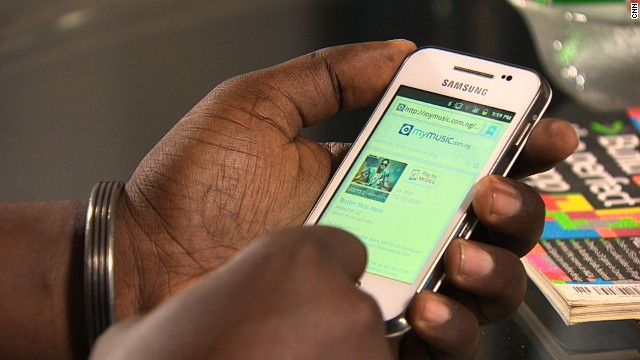

At Mobile World Congress 2026, a bold pledge was made: put a 4G smartphone in the hands of millions of Africans for just $40. The GSMA and the Handset Affordability Coalition unveiled an initiative that could rewrite the rules of digital access across the continent. The device price barrier? Nearly broken. But there’s a catch, one that no hardware discount can fix.
The network is the product.
And right now, the network tells a more complicated story.
Speeds That Can’t Keep Pace
nPerf’s 2025 data across three key African markets, Nigeria, Congo, and Ethiopia, reveals a landscape that is improving, but still far behind what most users in Europe or Asia take for granted.
Congo leads the pack with download speeds of 12.8 Mb/s, followed by Nigeria at 9.97 Mb/s, and Ethiopia bringing up the rear at a fragile 6.73 Mb/s, barely enough to stream standard-definition video without buffering.
For the millions of first-time smartphone users the $40 initiative aims to reach, this gap between device promise and network reality is not a footnote. It is the whole story.
Three Countries, Three Very Different Problems
What makes this data fascinating and sobering is that each country is struggling in its own distinct way.
Nigeria is the unlikely streaming champion of the three, posting the highest streaming performance index at 62.28%. Put on a YouTube video, and it’ll mostly hold together.
But try to browse a government portal, file an online form, or shop on an e-commerce site, and Nigeria’s web browsing score of just 27.36% tells you exactly what happens next: a spinning wheel and mounting frustration.
In a country where digital financial services and mobile commerce are rapidly expanding, that is a critical weakness.
Congo flips the script. It has the best latency of the group at 123 ms, meaning the network responds relatively quickly when you tap something.
But its streaming index of just 41.88% means video, increasingly the primary medium of education and entertainment for new internet users, remains a choppy, unreliable experience.

Ethiopia carries the heaviest burden of all. Its latency clocks in at a punishing 258 ms, more than double Congo’s, making video calls stutter, real-time apps lag, and interactive services feel broken. In a country where mobile internet is often the only internet, this isn’t a minor inconvenience. It’s a structural barrier.
The Congestion Trap And How to Escape It
Here’s the uncomfortable math behind the initiative: flooding a market with millions of new connected devices without strengthening the underlying infrastructure doesn’t create digital inclusion.
It creates digital disappointment. Congestion rises, speeds fall further, and the very people the program was designed to uplift end up with a device that underperforms.
But history offers a more hopeful counterargument. Demand, when it surges dramatically enough, has reliably pushed mobile operators to invest.
The GSMA is betting on exactly this dynamic that the sheer volume of new users created by the $40 smartphone will give operators both the incentive and the revenue base to upgrade their networks faster than they otherwise would.
It’s a calculated gamble, and not a crazy one.
What Needs to Happen
The roadmap differs by country, but the destination is the same. Ethiopia needs to address its latency problem without improvements there; no amount of affordable hardware will make video calls or real-time services workable.
Nigeria must shore up its browsing infrastructure, because a smartphone that can’t reliably load a webpage is a smartphone that can’t unlock the economic opportunities mobile connectivity promises. And Congo needs to invest in its streaming capacity, or risk becoming a country where people own 4G phones but can’t reliably watch a 4G video.
Three distinct diagnoses. One shared prescription: the network must keep pace with the device.
The Verdict
The $40 smartphone is a genuine breakthrough in device affordability, and the ambition behind the GSMA initiative is real. But the history of technology is littered with hardware solutions that arrived before the infrastructure could support them.
Africa’s mobile networks are not beyond rescue, far from it. They are already on a meaningful upward trajectory in many places.
The question is whether that trajectory is steep enough, and fast enough, to meet the moment. For the millions of people who will soon hold a $40 4G phone in their hands for the first time, the answer will not come from a press release at a conference in Barcelona.
It will come from whether the video loads.